Archive for " tibet"
thumb

Everest Base Camp

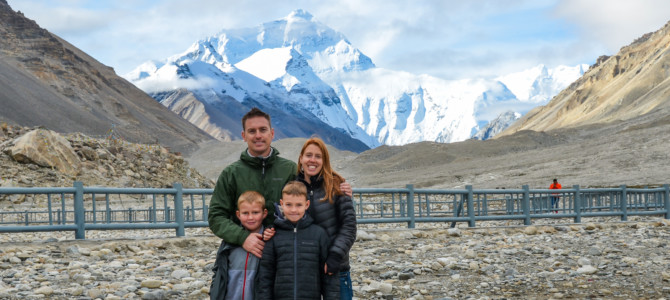
For many people, the main reason that they go to Tibet is to see the amazing view of Everest’s famous North Face. The view of Everest from the Tibet side gives a clear, sweeping view of the mountain. I receive more emails about the Everest region that any other region of the Tibetan Plateau. I have been fortunate enough to go to the Tibet-side Everest Region more than a dozen times over the years. In this [...]

thumb

Tibet Photography Workshop: October 10th to 19th, 2013

Plateau Photo Tours, which I co-own, will be hosting a Photography Workshop in Garze Prefecture in the traditional Tibetan region of Kham from October 10 to October 19. Garze prefecture has the largest population of Tibetan people of any of the prefectures on the Tibetan Plateau. Full of Buddhist monasteries, pilgrimage sites, grasslands, yak herding communities, farming villages, snow-capped peaks, alpine [...]

thumb

Tibet Photography Adventure: June 8th to June 22nd, 2013

  Plateau Photo Tours, which I co-own, will be hosting a Kham Tibet Overland Journey from June 8th to June 22nd, 2013. This adventure will take you through some of the most stunning scenerey and best preserved culture found on the Tibetan Plateau. Starting in Xining, the largest city on the Tibetan Plateau, we will fly to Jyekundo, the capital town of Yushu Tibetan Autonomous Prefecture in the traditional Tibetan [...]

thumb

Lhasa

Lhasa ལྷ་ས་, meaning “place of the gods” in Tibetan, is the most important city in Tibet. Lying at an elevation of 3655 meters / 12,000 feet, Lhasa is the second largest city on the Tibetan Plateau after Xining ཟི་ལིང་. Historically, Lhasa was the capital of the traditional Tibetan region of Ü དབུས་, though today it is the capital of all of the Tibet Autonomous [...]

thumb

Tibet and getting a Chinese visa

Getting a Chinese tourist visa is a fairly simple process. For many nationalities, including North Americans, EU citizens, UK citizens. Australians and New Zealanders, you can apply for a Chinese tourist visa at the Chinese embassy/consulate in your home country and in most Chinese embassies/consulates around the world. On the Chinese visa application, it asks for you to list the places in China that you plan [...]

thumb

Why not Amdo and Kham??

As you are probably aware of by now, Lhasa and the rest of the Tibet Autonomous Region is closed indefinitely to foreign travelers (UPDATE: The region reopened in July 2012). There is no telling at this point when the area will reopen. Does that mean you need to cancel your upcoming trip to Tibet altogether? Not necessarily! It is important to remember that Tibet consists far more  than just the Tibet Autonomous [...]

thumb

Problems with a Group Chinese Visa

Here are the differences between a standard Chinese visa and a Group Chinese Visa. In addition to a Chinese visa, all foreigners are still required to have travel permits as they have for the past 30 years. This post is to explain the differences between a Standard Chinese Tourist Visa and a Group Chinese Tourist Visa. If you plan to go to the Tibet Autonomous Region (TAR) from Mainland China, all you need is [...]

thumb

Nangchen

Nangchen county ནང་ཆེན་རྫོང་ is one of 6 counties located in Yushu Tibetan Autonomous Prefecture in the Qinghai Part of Kham. Though Nangchen is remote and underdeveloped, it is one of the most beautiful parts of Tibet and has some of the best preserved Tibetan culture remaining. Nangchen county covers 11,539 square kilometers/4455 square miles and has around 70,000 people with Tibetans [...]

thumb

Lhasa to reopen

Lhasa and most areas of the Tibet Autonomous Region (TAR) will be reopening later this week. Travel permits for this region have already started being processed for some groups. It normally takes travel permits about 3 days to be processed so the first foreign travelers should be able to arrive in Lhasa as early as April 1st. This reopening is for Lhasa and most of the TAR except for Chamdo prefecture in far [...]

thumb

Nomad life

Though Tibetan nomads are becoming fewer and fewer each year, they can still be found across the Tibetan Plateau. Nomad life is simple, but difficult. Hardships include yaks dying from disease, yaks starving to death from heavy snow, difficulties selling meat, low yak wool prices and the constant pressure to resettle to towns. Many nomads are now only semi-nomadic. They live on the grasslands in their yak wool [...]