
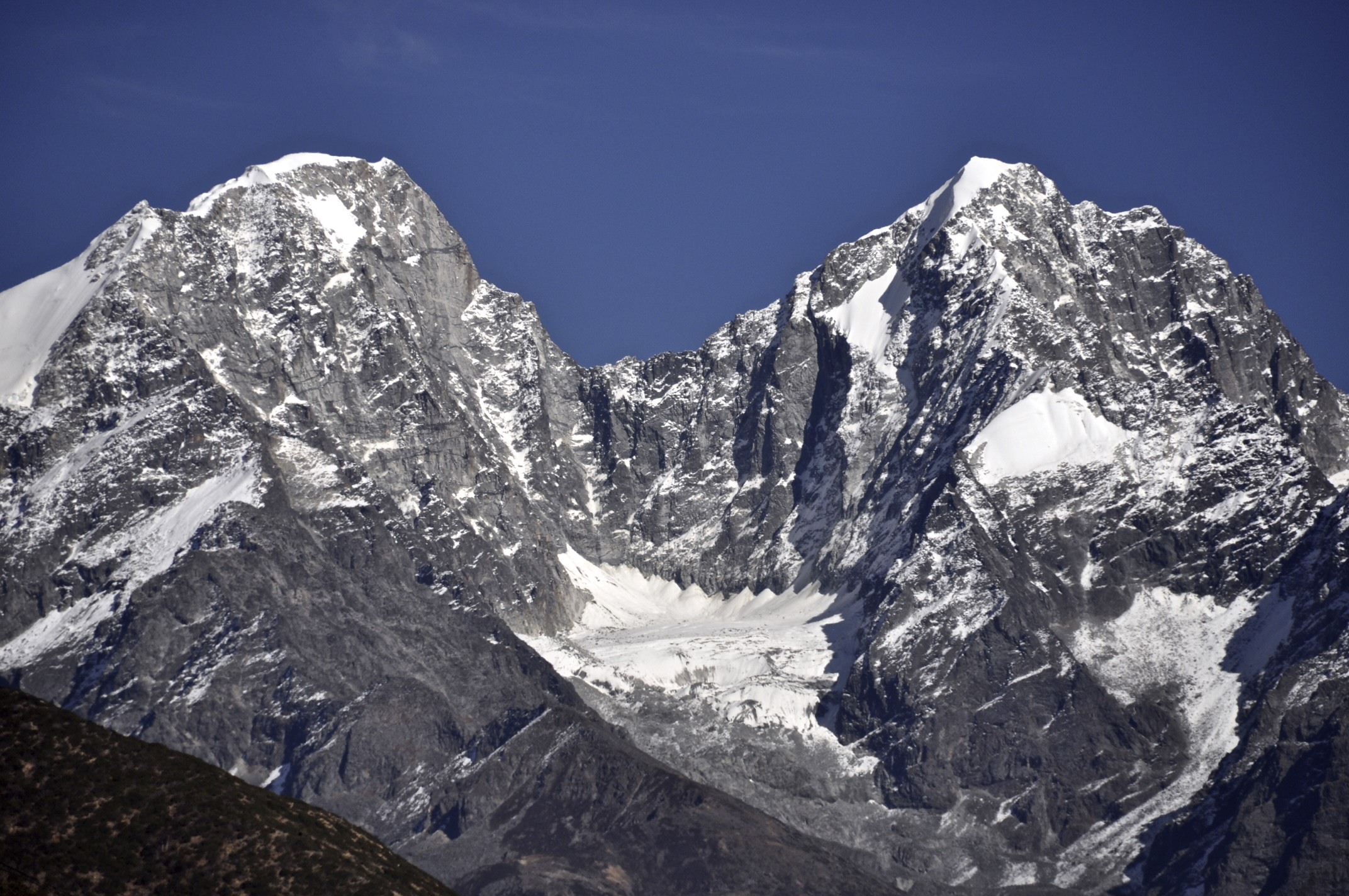
Snow-capped peaks along the way from Kangding to Tagong
Overland from Chengdu to Shangri La
The 1200 kilometer overland route from Chengdu to Shangri La goes through some of the most rugged and beautiful terrain the eastern Tibetan Plateau has to offer. Glaciated peaks, evergreen forests, crystal clear rivers, glacier-fed lakes and traditional Tibetan culture are all found along this route. Though this route can be done by using public transportation, having a private vehicle will allow you to see this region up close and at your own pace. There is a lot to see and do along this route so don’t rush through this area. Here is the itinerary I recommend for this region:
Day 1: Chengdu to Kangding (Dartsendo) Distance: 325 kilometers/203 miles
There are a couple of bus stations in Chengdu, the capital of Sichuan province, that have buses going to Kangding. The main bus station is the Xin Nan Men station, which has buses about every hour leaving for Kangding starting at 7am. The other bus station is the small Wu Hou Ci station in front of the Kangding Hotel in the Tibetan District of Chengdu. This station normally has 2 daily buses to Kangding. Buses take between 7 and 9 hours.
For the most part, this section of the journey is uninteresting. The first 150 kilometers is all on an expressway with literally nothing to see. The remaining 175 kilometers is along a narrow, winding road that goes through several small Chinese towns and villages. You slowly ascend to the top of the Er Lang Shan Pass, which tops out at a little over 3000 meters. The Er Lang Shan Pass is the traditional border between Chinese and Tibetan cultures. Once you cross over the pass, you have entered into Garnze Tibetan Autonomous Prefecture དཀར་མཛེས་ཁུལ་. The large town of Luding sits in the valley below the pass. From Luding, you begin to ascend again to Kangding.
NOTE: If you plan to cycle the route from Chengdu to Shangri La, I personally recommend starting in Kangding. There is really little to see along the route from Chengdu to Kangding, plus the road is extremely narrow in many places with heavy truck traffic.
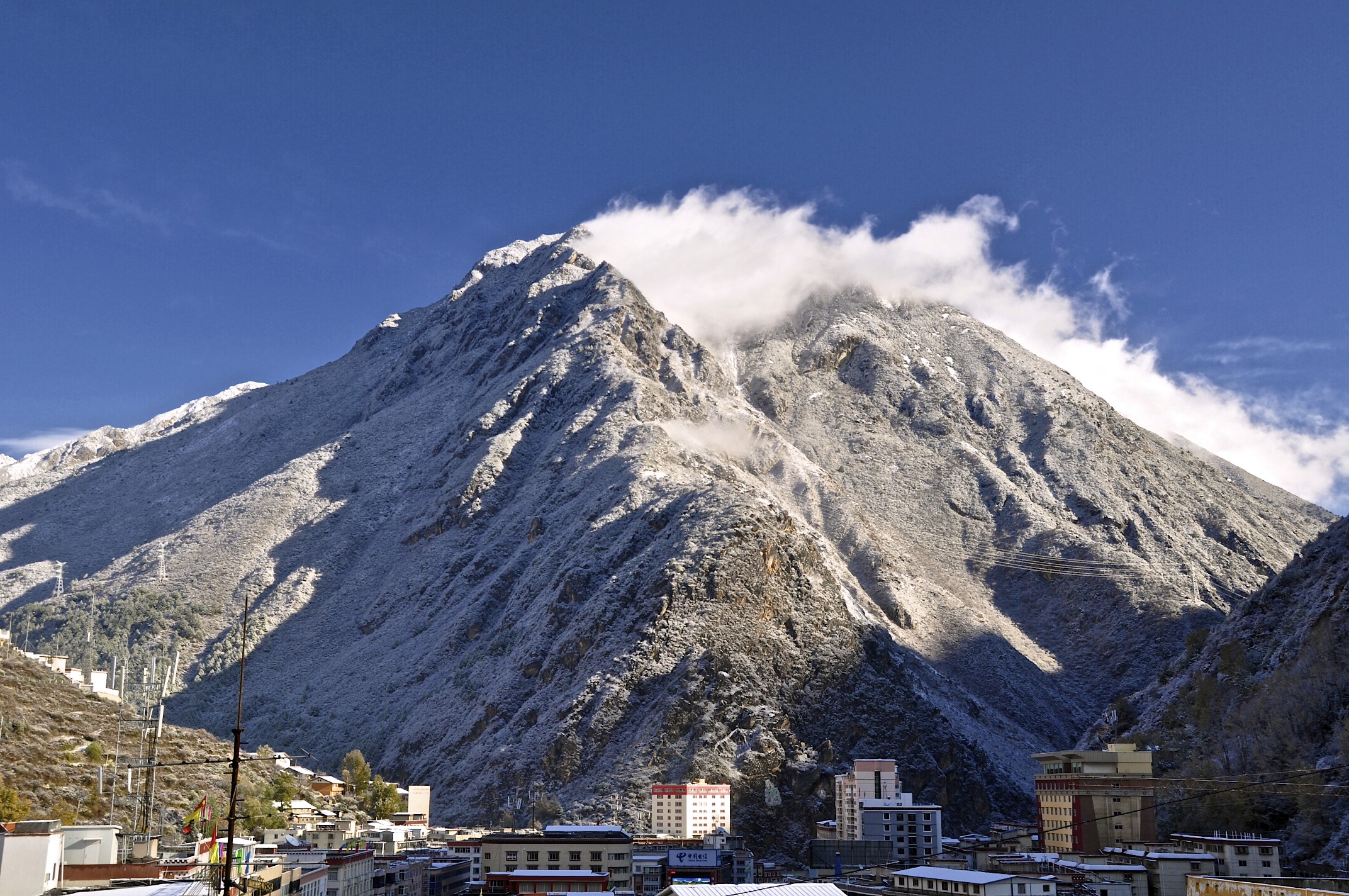
Overlooking Kangding, known as Dartsendo in Tibetan
Days 2 and 3: Kangding Elevation 2600 meters
Kangding, known in Tibetan as Dartsendo དར་རྩེ་མདོ་, is the first Tibetan region as you travel west from Chengdu. Lying at an elevation of 2600m / 8530 feet, Kangding has been a main trading center, particularly for tea, between Chengdu and Lhasa for many centuries. Even today, most goods traveling from mainland China to the inner regions of the Tibetan Plateau pass through Kangding. Most travelers to Kangding stay only 1 or 2 days. However, there is enough to see and do in the area to keep one busy for several days. For more about what to see and do in and around Kangding, read the post below:
I have suggested staying in Kangding for 2 nights, but if your schedule allows it, stay longer. There is so much to see and do in and around town. There are 20 peaks in the surrounding area that rise above 6000 meters. Talk to the good people at Zhilam Hostel about great treks in the area as well as amazing picnic areas that are relatively close by!
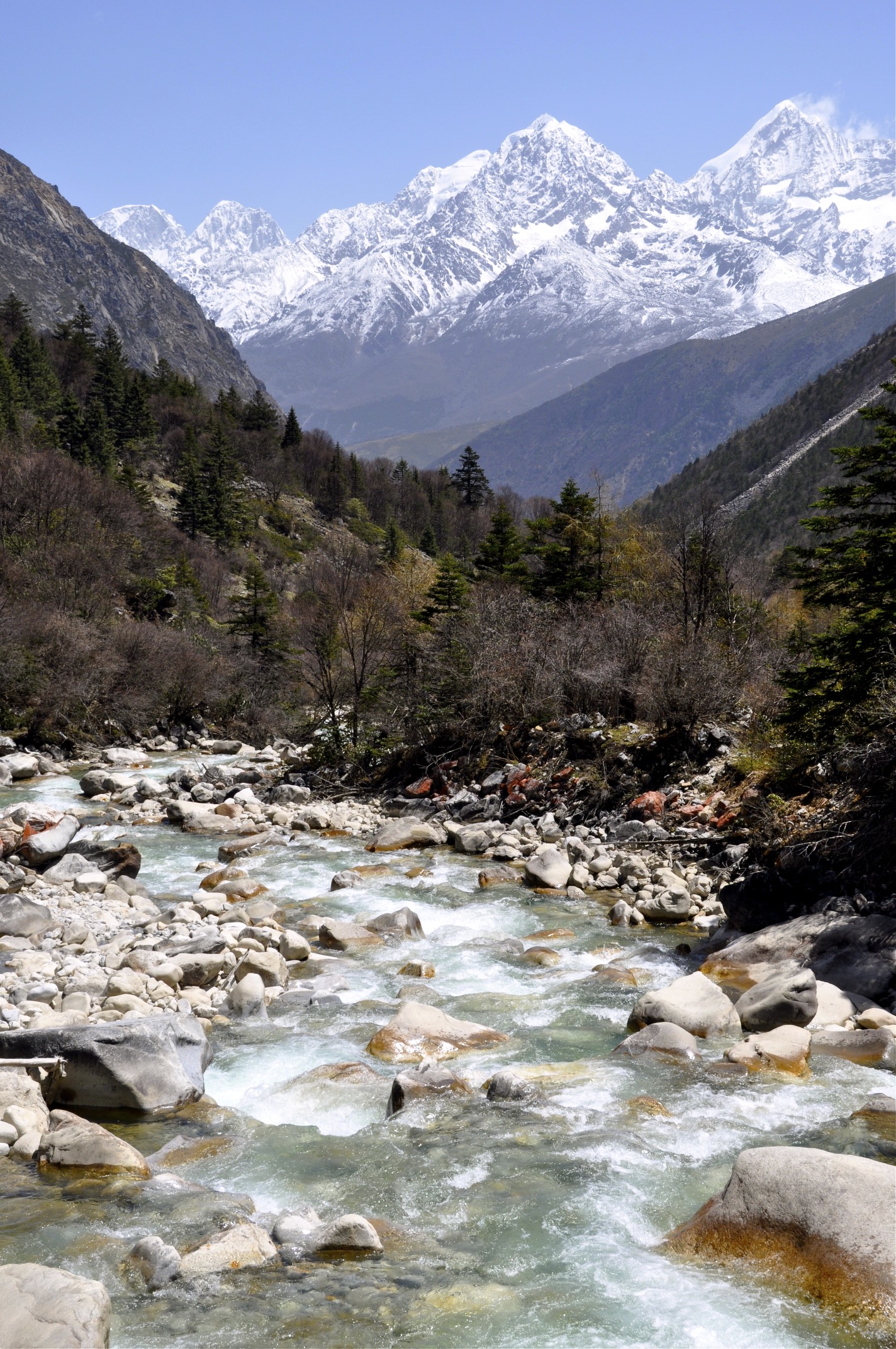
Glacier fed river and snow-capped peaks just outside of Kangding
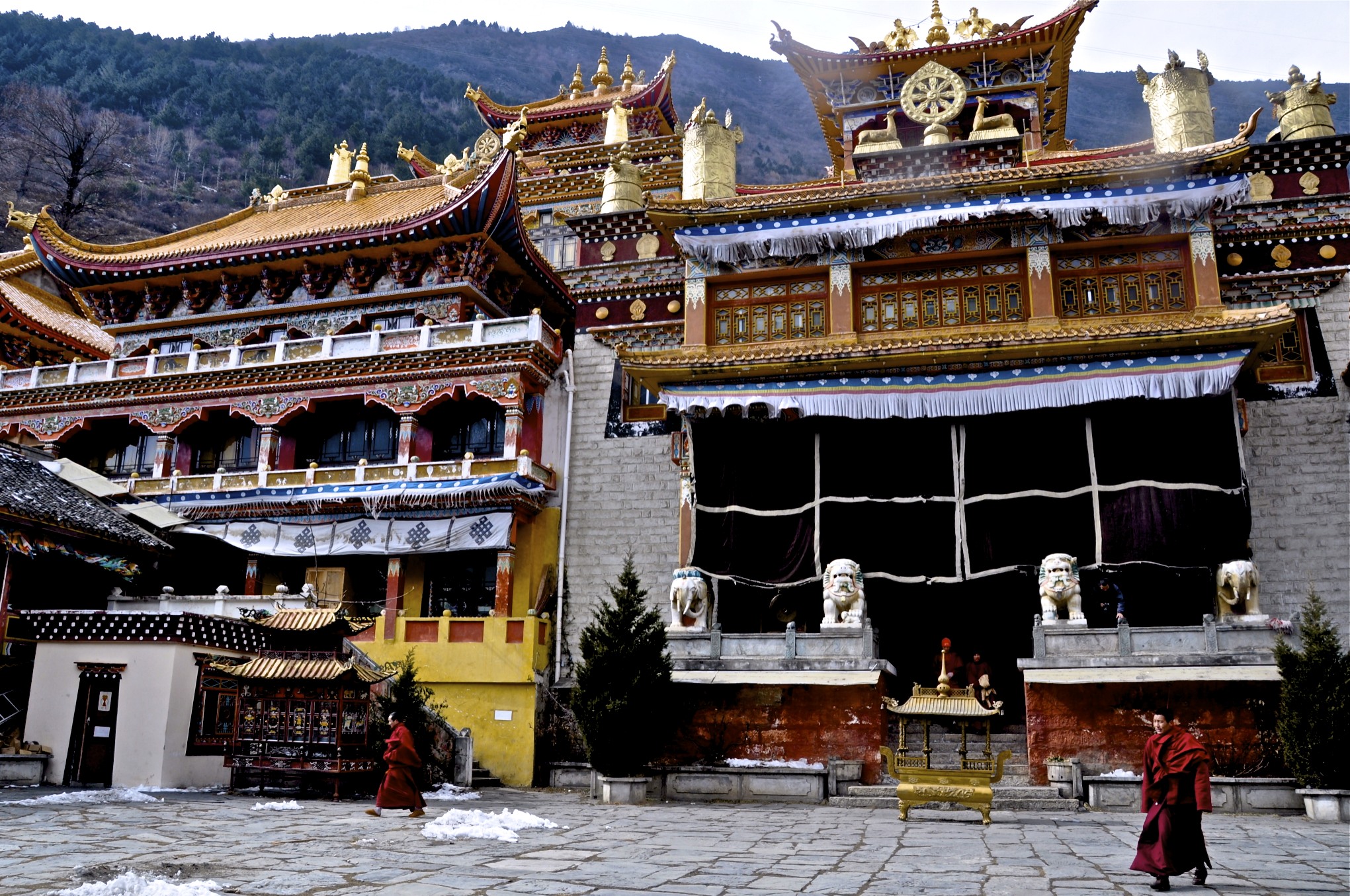
Monks outside a monastery in Kangding
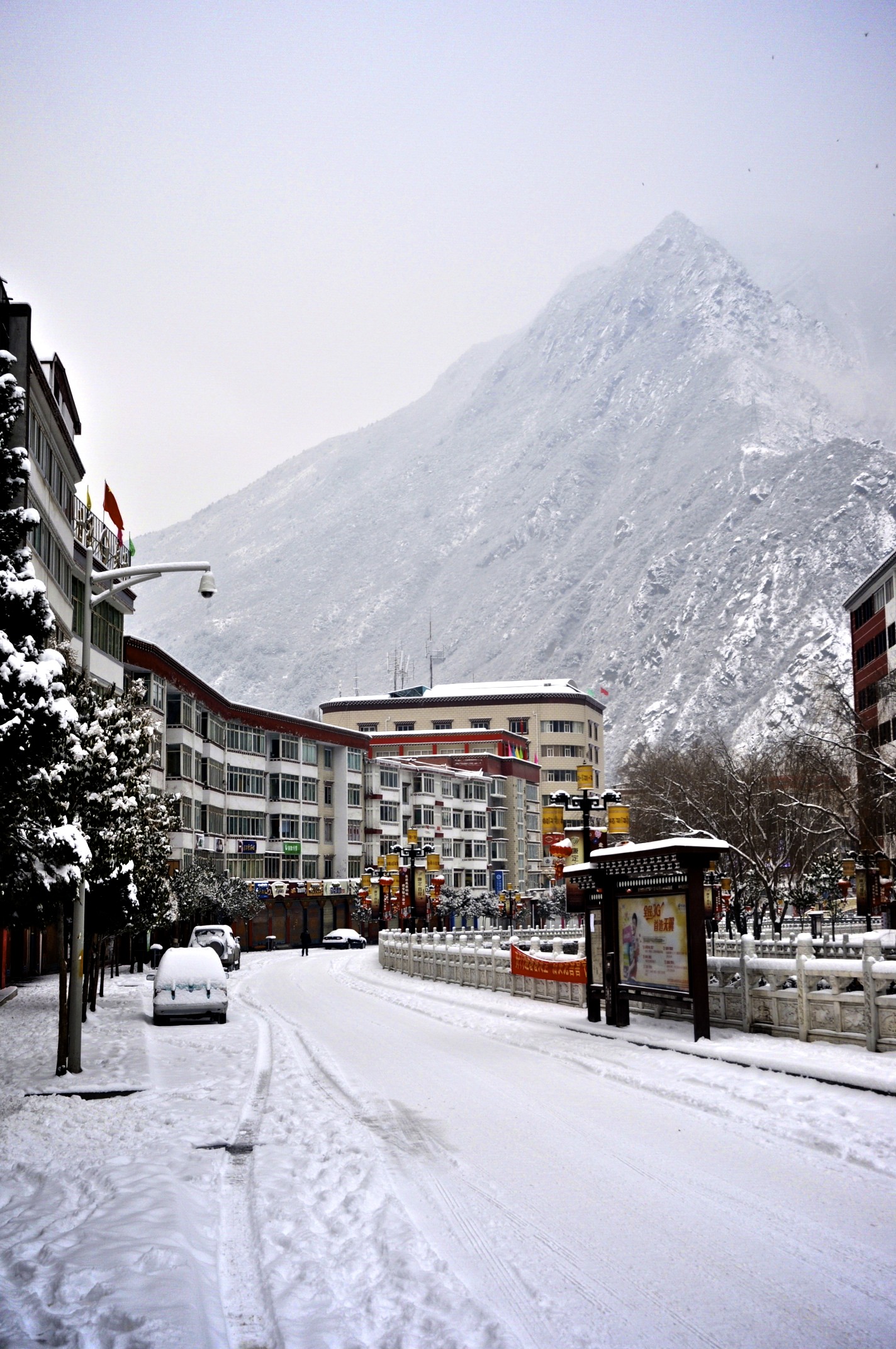
Fresh snow in Kangding
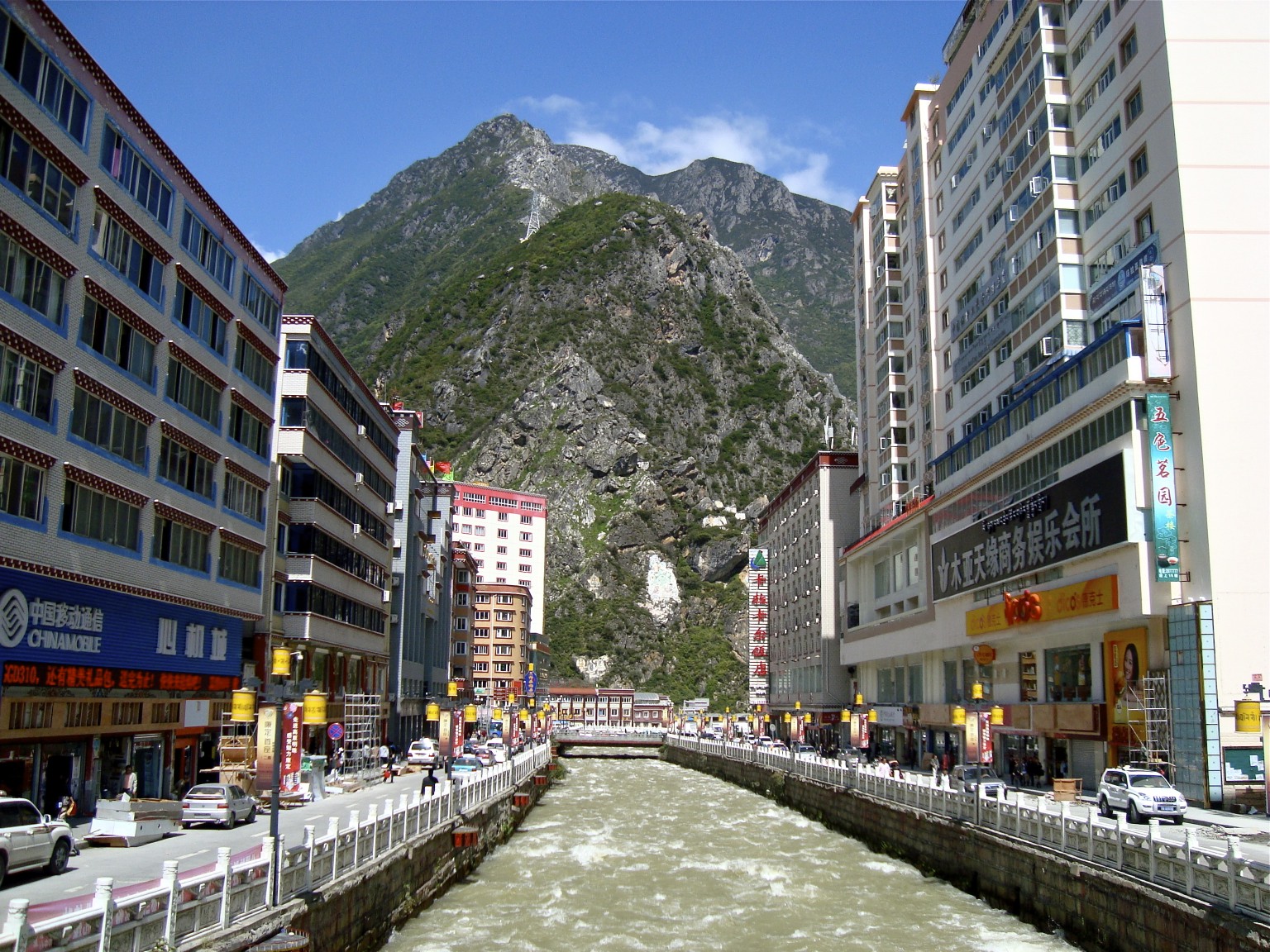
River flowing through downtown Kangding
Day 4: Kangding to Tagong (Lhagang) Distance: 112 kilometers/70 miles Elevation 3725 meters
Though Tagong requires a detour off of the main highway going to Shangri La, it is well worth the detour! Tagong, known in Tibetan as Lhagang ལྷ་སྒང་, lies at 3725 meters and is 112 kilometers from Kangding. This high altitude grassland area is home to many Tibetan nomads who spend their days herding yaks. From late spring until fall, the nomads live in traditional style black yak wool tents. Tagong is a great place to experience authentic Kham Tibetan culture. Though the small town can be quite full of Chinese tourists during the summer months, there are many places to explore just outside of town. Talk to Chyoger Treks, who operate an excellent cafe and guesthouse just outside of the monastery, for more details on mountain treks and horse trekking in the area.
In addition to a large monastery, expansive grasslands and plenty of Kham Tibetan nomadic culture, Tagong has excellent views of nearby Mt. Zhara Lhatse, know in Chinese as Yala Xue Shan. Zhara Lhatse rises to 5820 meters and is one of the most beautiful mountains in the Sichuan part of Kham.
The easiest way to get to Tagong is by shared mini-van taxi. These shared taxi’s take about 3 hours to reach Tagong.It is best to leave Kangding in the early morning in order to give you enough time to explore Tagong. If you have a little bit of extra money or if you are traveling with a group, hire the taxi all to yourself. That way you can have the driver stop along the way to photograph the amazing scenery. There are 2 ways to reach Tagong from Kangding. Though the route leading to the nearby lake of Mu Gu Cuo (Migoo Tso) is a little shorter, the route going west over the Zhe Duo Shan Pass is more scenic. The top of the pass on a clear day offer great views of the nearby snow-capped peaks. Past the high pass towards Tagong, there can also be a clear view of Minyak Konka, the highest mountain in eastern Tibet, which rises to 7556 meters.

Mt. Zhara Lhatse, near Tagong, rising to 5820 meters
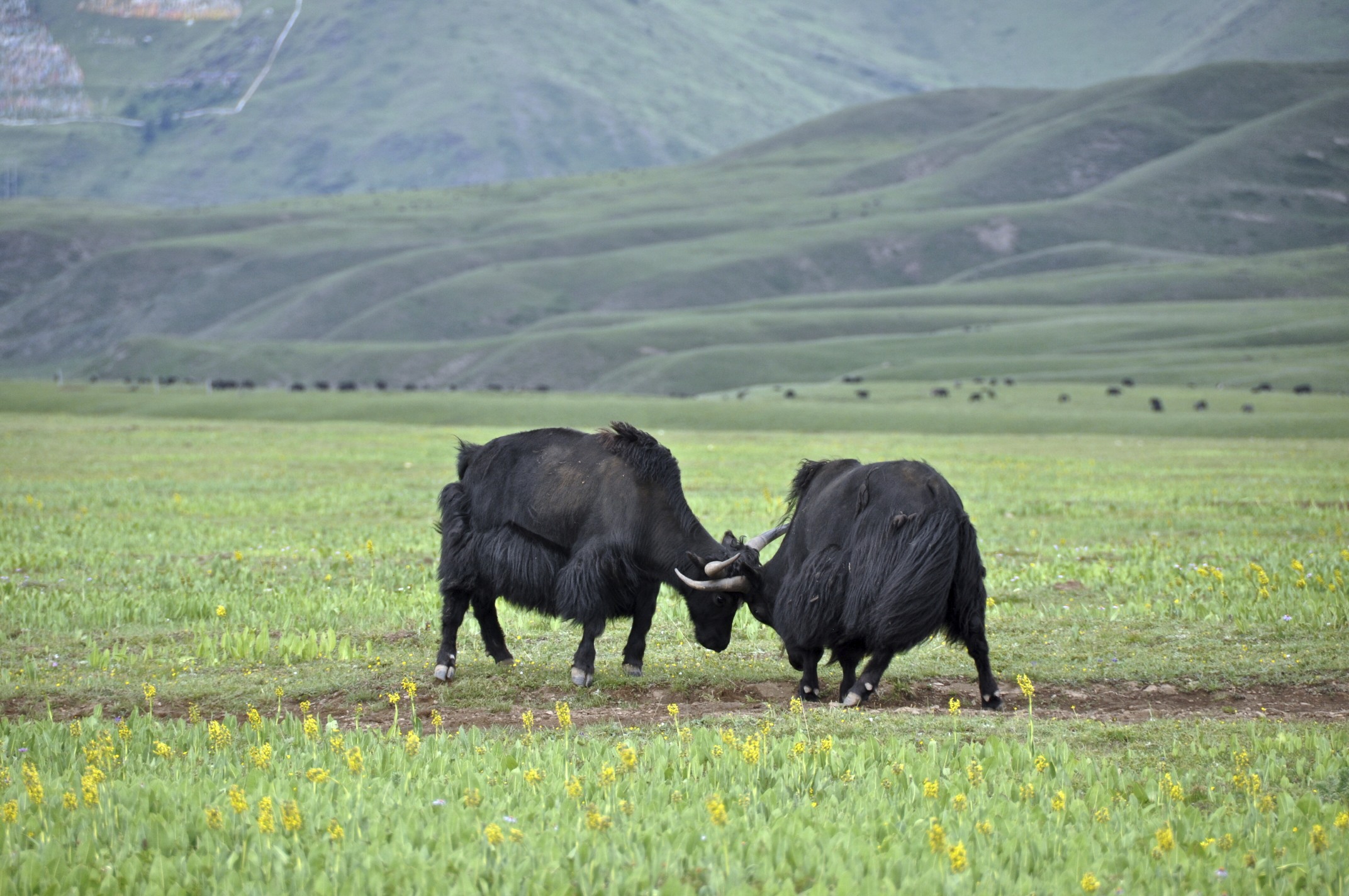
Yaks on the grasslands of Tagong
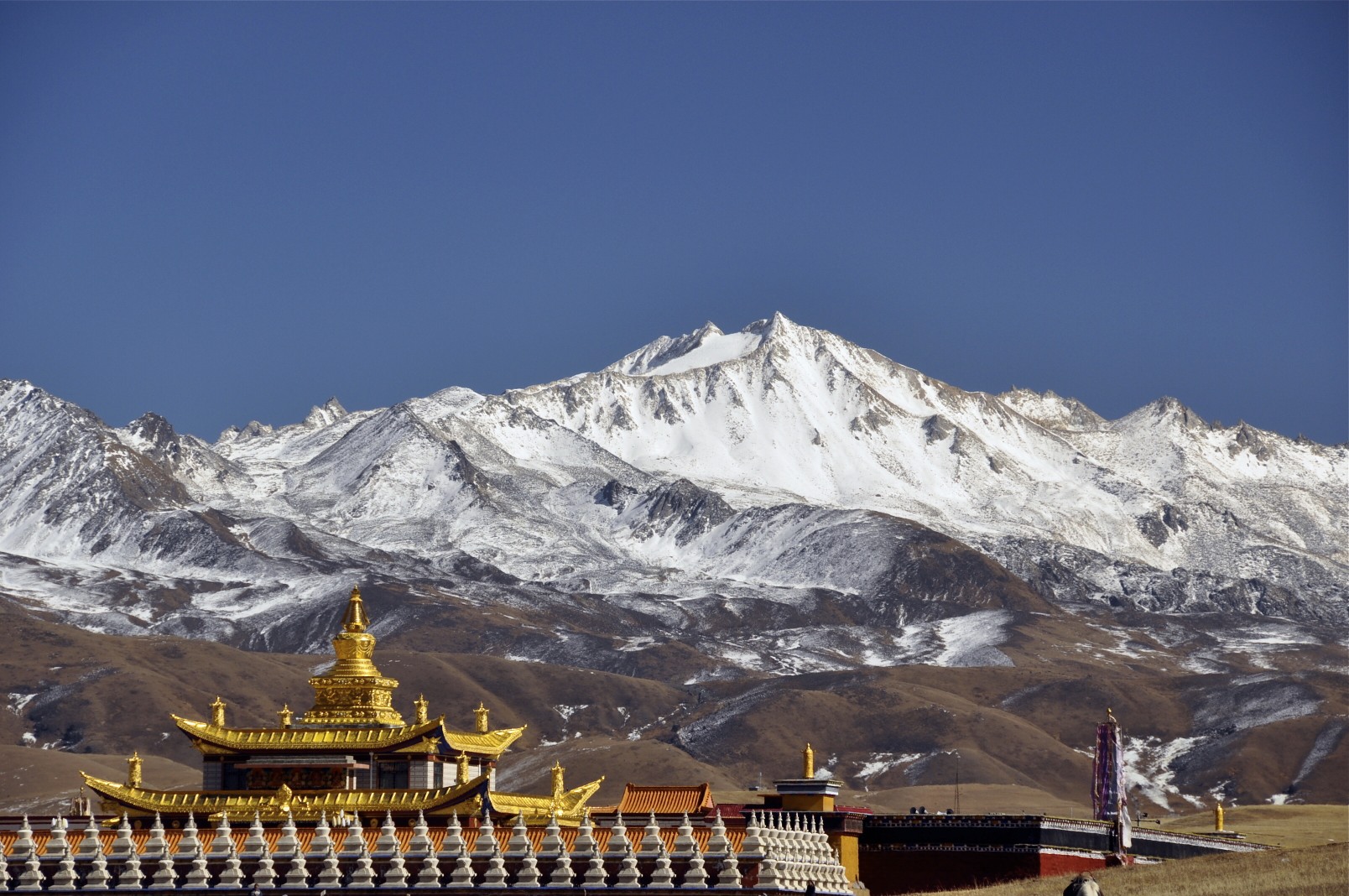
Monastery below the mountains in Tagong
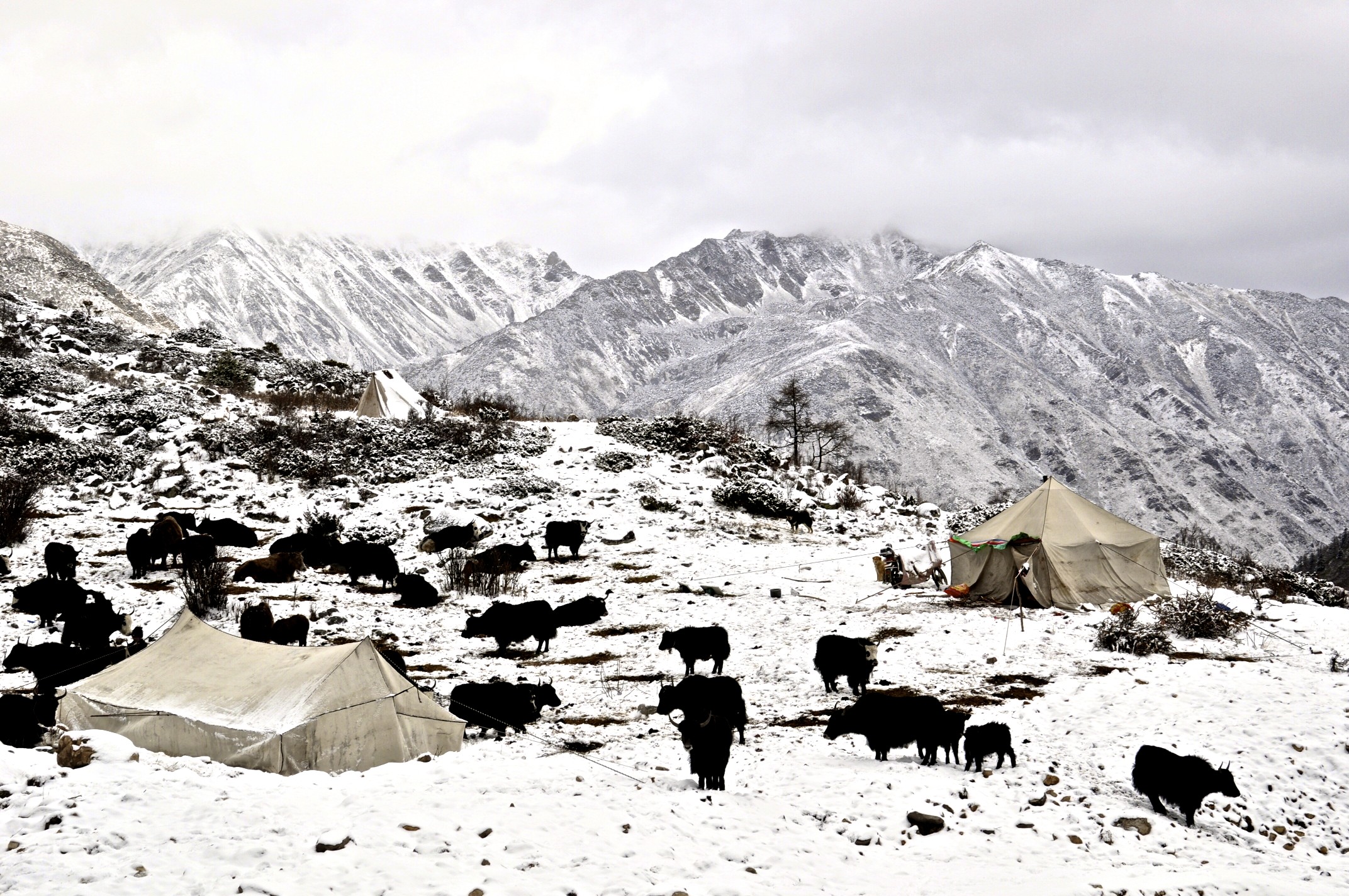
Nomads with their yaks in the snow near Tagong
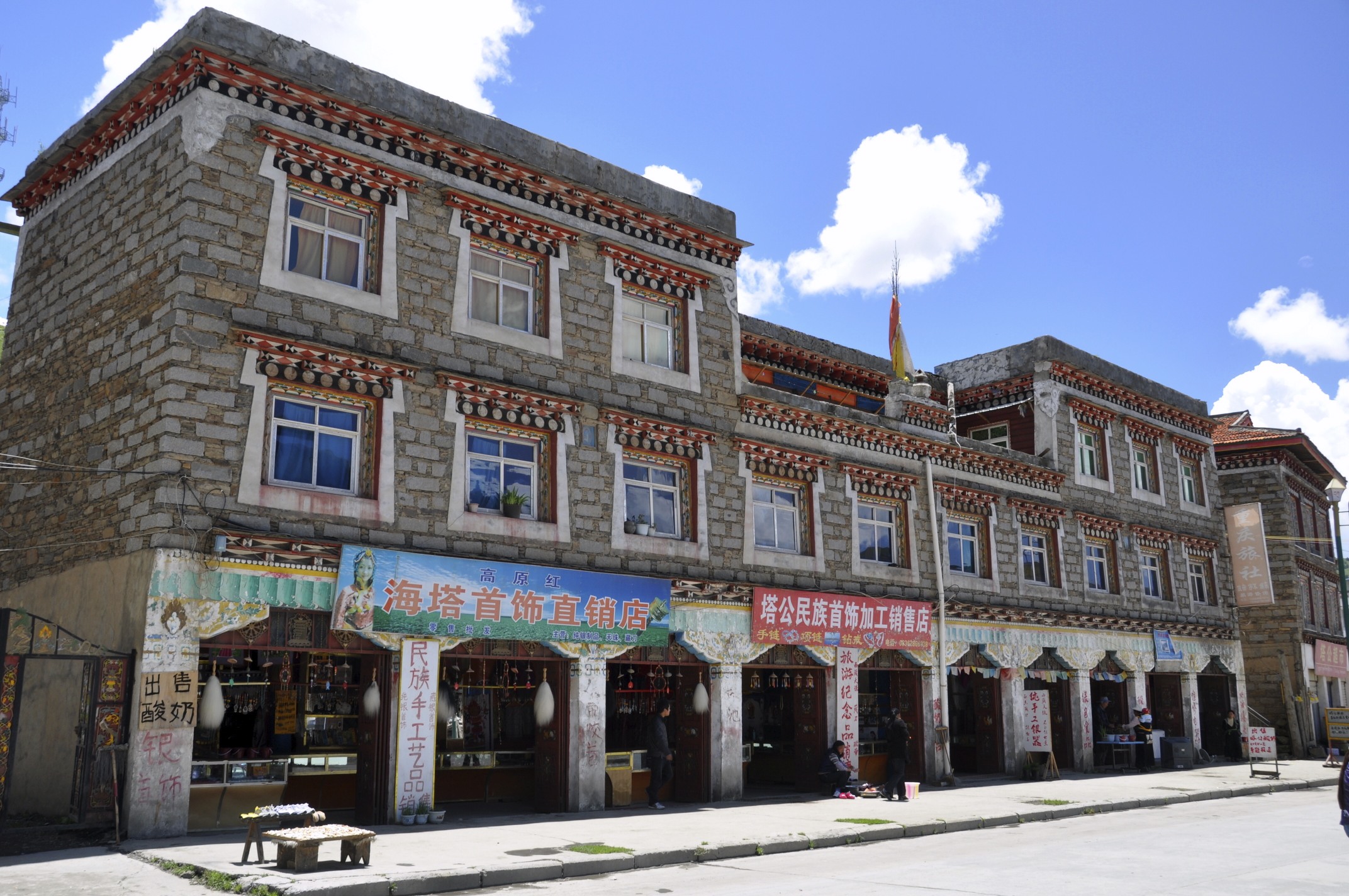
Typical stone style of home found in Tagong
Day 5: Tagong to Kangding Distance 112 kilometers/70 miles
There is so much to see and do in this area that I strongly suggest staying for at least 1 night and most of the next day. In the later afternoon, you can take a shared mini-van taxi back to Kangding and then continue your journey towards Shangri La. There are no public buses going from Tagong towards Litang or Shangri La. It is easiest to just return to Kangding and then take the bus from there.
Day 6: Kangding to Litang Distance 285 kilometers/178 miles Elevation 4000 meters
From Kangding you will travel west to the wild west town of Litang ལི་ཐང་. Litang sits at 4000m and is a main nomadic trading center for Kham Tibetans. Tibetan nomads from the region, on motorcycles or even horseback, come to Litang each day to buy and sell goods. Litang is well over 85% Tibetan and has several places to see. On the far west end of town, there is a huge, white stupa where Buddhist worshippers gather each morning. They walk the kora around the stupa while spinning prayer wheels and chanting mantras. On the north end of town is the Litang Chode Monastery, which was established in 1580. It is the largest monastery in the region with several hundred monks. Litang was the birth place of the 7th and 10th Dalai Lama’s. The actual home that the 7th Dalai Lama was born in still exists in the center of town and can be visited free of charge.
In Litang, be sure to talk to either Tsering or Medok for more information on the area. Tsering is the owner of the Peace Guesthouse, located near the bus station. He speaks English well and knows the region better than anyone. Medok is the owner of the Potala Inn. She can arrange homestays in the area as well as tours to interesting sites outside of town.
NOTE: Major road construction has been going on between Kangding and Litang for the past couple of years. Large sections of this road are in poor condition. Though the distance is only 285 kilometers, it often takes buses 10 to 12 hours to cover the distance.

Khampa from Litang

Woman spinning a prayer wheel in Litang
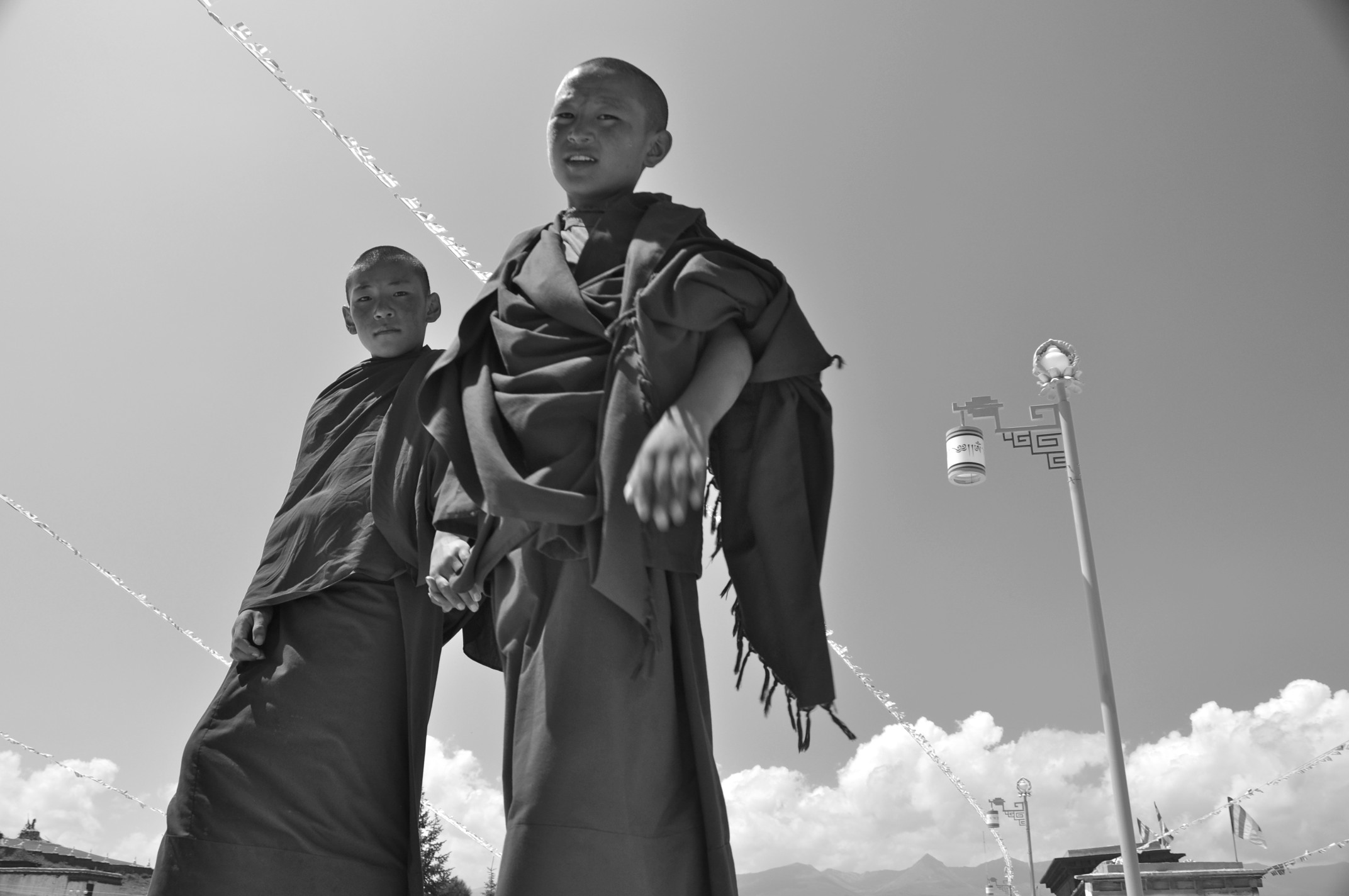
Young monks in Litang
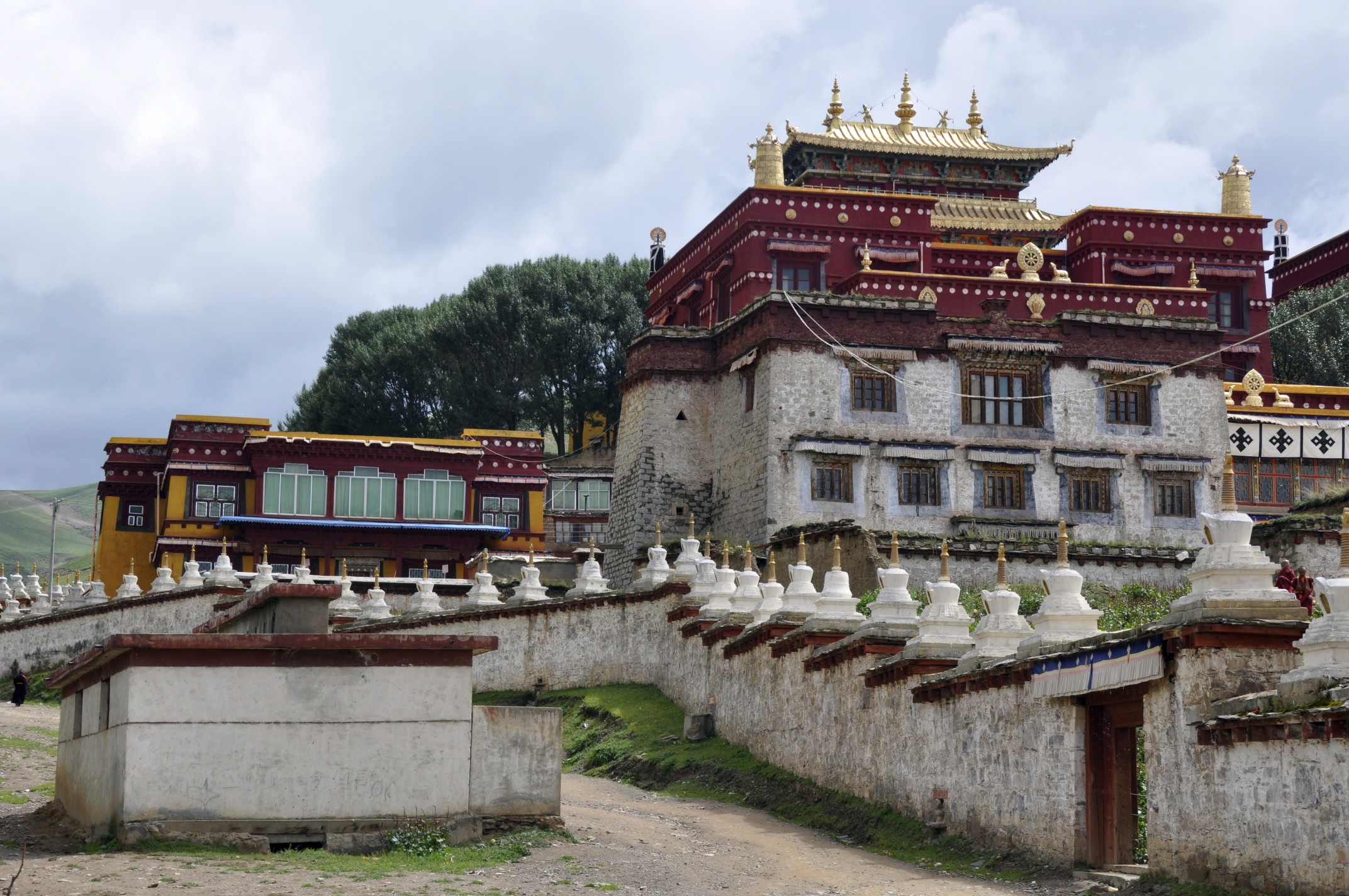
Litang Chode Monastery

Nomads near Litang
Day 7: Litang
I recommend staying 2 nights in Litang in order to see the unique Kham culture that this area has. The grasslands on the south end of town often have nomads camped out on them during the summer months. Just a short 30 to 45 minute drive west of town also leads to some vast nomadic grasslands.
Day 8: Litang to Xiangcheng (Chaktreng) Distance 205 kilometers/128 miles Elevation 2895 meters
The scenery between Litang and Xiangcheng, known as Chaktreng ཕྱག་འཕྲེང་ in Tibetan, is quite amazing. You go from huge expanses of grassland to the top of the Tu Er Shan Pass at just under 4700 meters. On the top of the pass, the scenery is quite moon-like devoid of trees and covered in huge boulders. From the pass, you descend back below the tree-line to lush evergreen forests with glacier-fed rivers flowing through them. If you are taking a public bus, you will miss nearly all that this section has to offer. If you are taking a private car, be sure to stop often and explore this area up close.
Xiangcheng itself is fairly uninteresting. It is a mid-sized town that has some markets and a couple of monasteries to explore. It really serves as a place to overnight between Litang and Shangri La. There are a couple of decent guesthouses to stay in and plenty of shops and restaurants. There is also an ATM in town that normally accepts a foreign card. This is the first ATM that accepts a foreign card since Kangding.
Sometimes there is a daily bus from Litang going to Xiangcheng, but not always. When there is not a direct bus from Litang to Xiangcheng, you still have 2 options. The easiest option is to take a shared mini-van taxi between the 2 towns. Mini-vans leave Litang very early in the morning for Xiangcheng. You can either purchase a seat int he shared mini-van or hire the entire vehicle. If you hire the entire vehicle, the driver will stop at all of the scenic places along the way so you can take pictures and explore. Another option is to wait for the bus from Kangding to pass through Litang as it continues on to Xiangcheng. The bus normally passes through in the late afternoon or early evening. If you can’t speak Chinese or Tibetan, have Tsering at the Peace Guesthouse assist you.
NOTE: If you have the time, an excellent side trip this day would be to go to Daocheng (known as Dabpa འདབ་པ་ in Tibetan) and then on to the Yading Nature Reserve. This would require an additional 3 or 4 days. The Yading Nature Reserve is home to 3 peaks considered to be holy to the Tibetan people. These 3 peaks each rise to nearly 6000 meters. There is a great kora around the main mountain that takes about 2 days to hike. For more information on this area, read the post below:
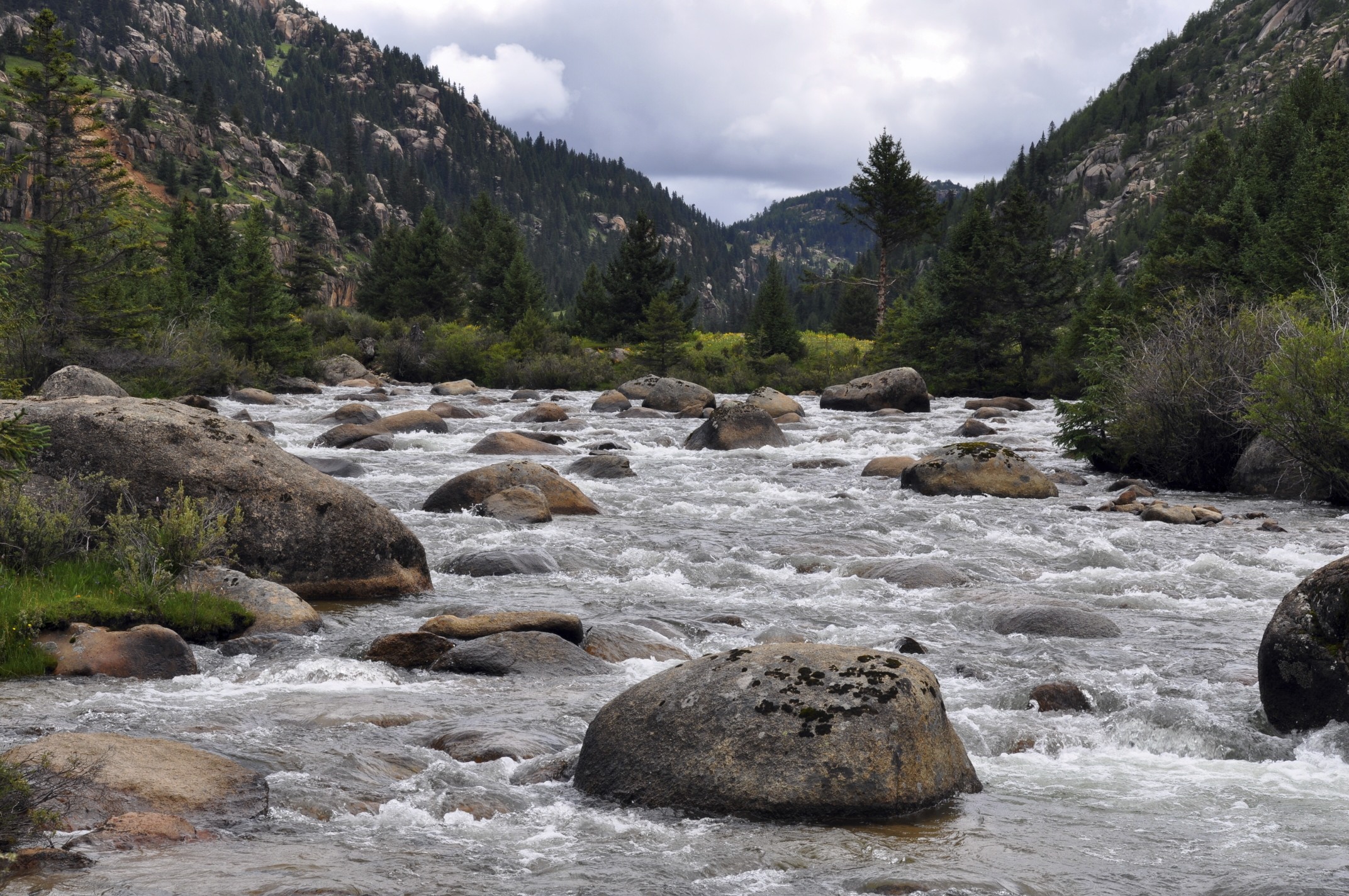
Evergreen forests with glacier-fed rivers along the way from Litang to Xiangcheng
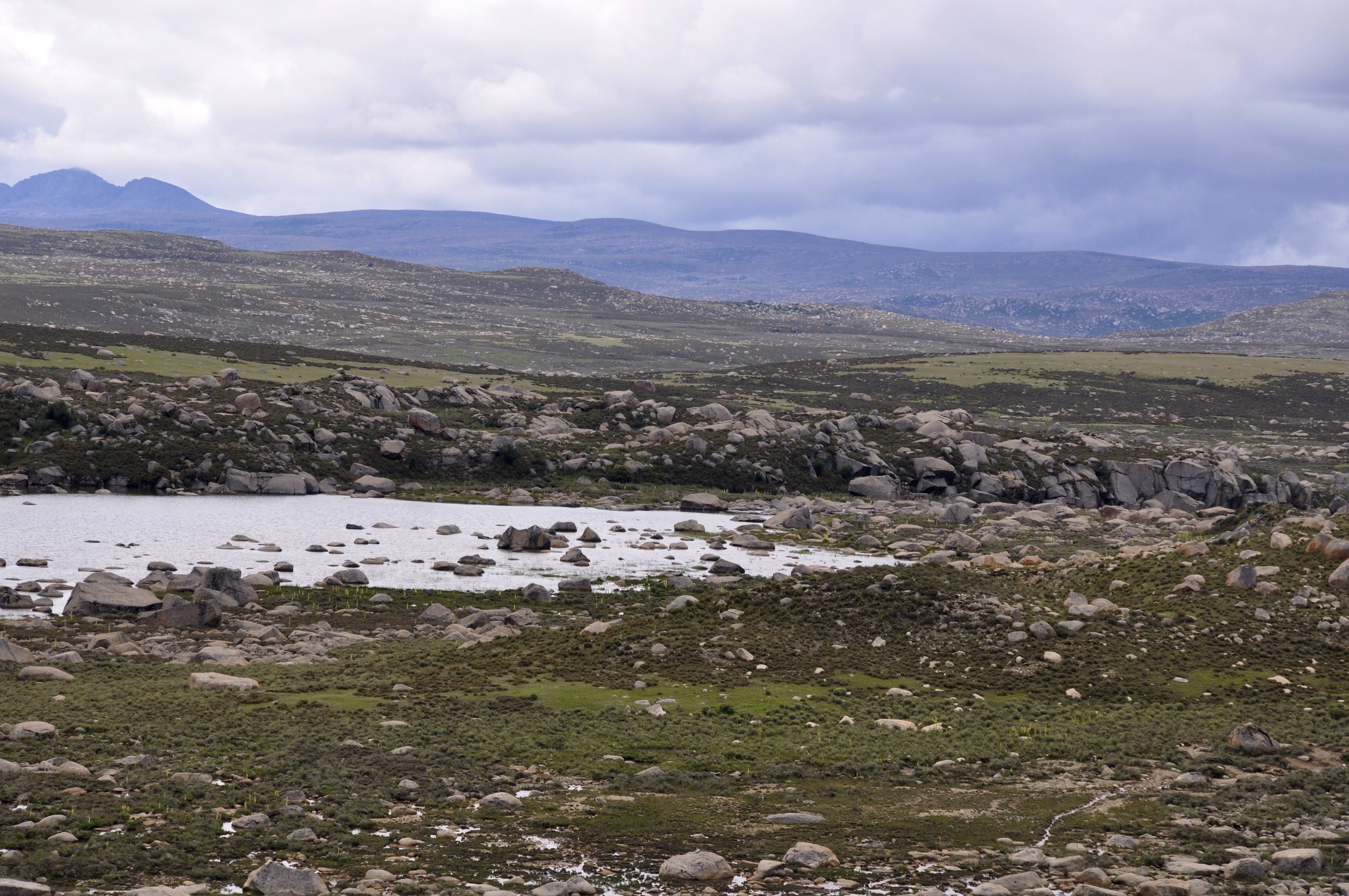
Moon-like features on a high pass between Litang and Xiangcheng
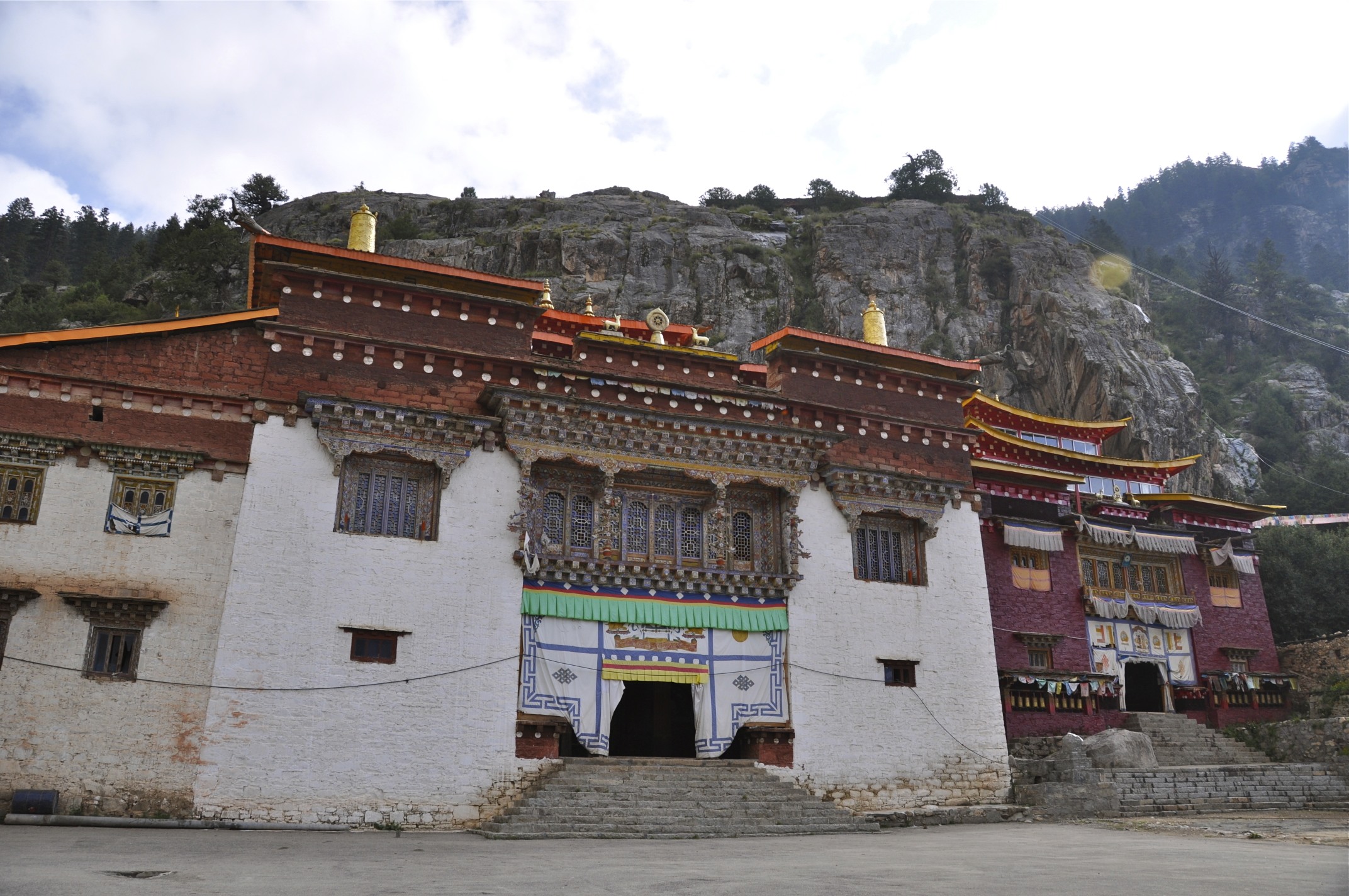
Monastery along the way to Xiangcheng
Day 9: Xiangcheng to Shangri La (Gyelthang) Distance 205 kilometers/128 miles Elevation 3290 meters
This final day will take you from Xiangcheng to Shangri La, known as Gyeltang རྒྱལ་ཐང་ in Tibetan. The drive is amazingly beautiful as it crosses the jagged mountain peaks that form the border between Sichuan and Yunnan provinces. Shangri La marks the end of the Kham Tibetan world. The Old Town in Shangri La is a maze of great restaurants, bars guesthouses and shops. At the big square in the Old Town, there is Tibetan dancing each night. On the north end of town is Ganden Samtseling Monastery, which is the largest Tibetan Buddhist monastery in Yunnan. It is over 300 years old and has over 650 monks. There is a daily bus connecting Xiangcheng with Shangri La. Most of the road is in great condition, though there is a 70 kilometer section in the middle that is quite rough and is often under construction.
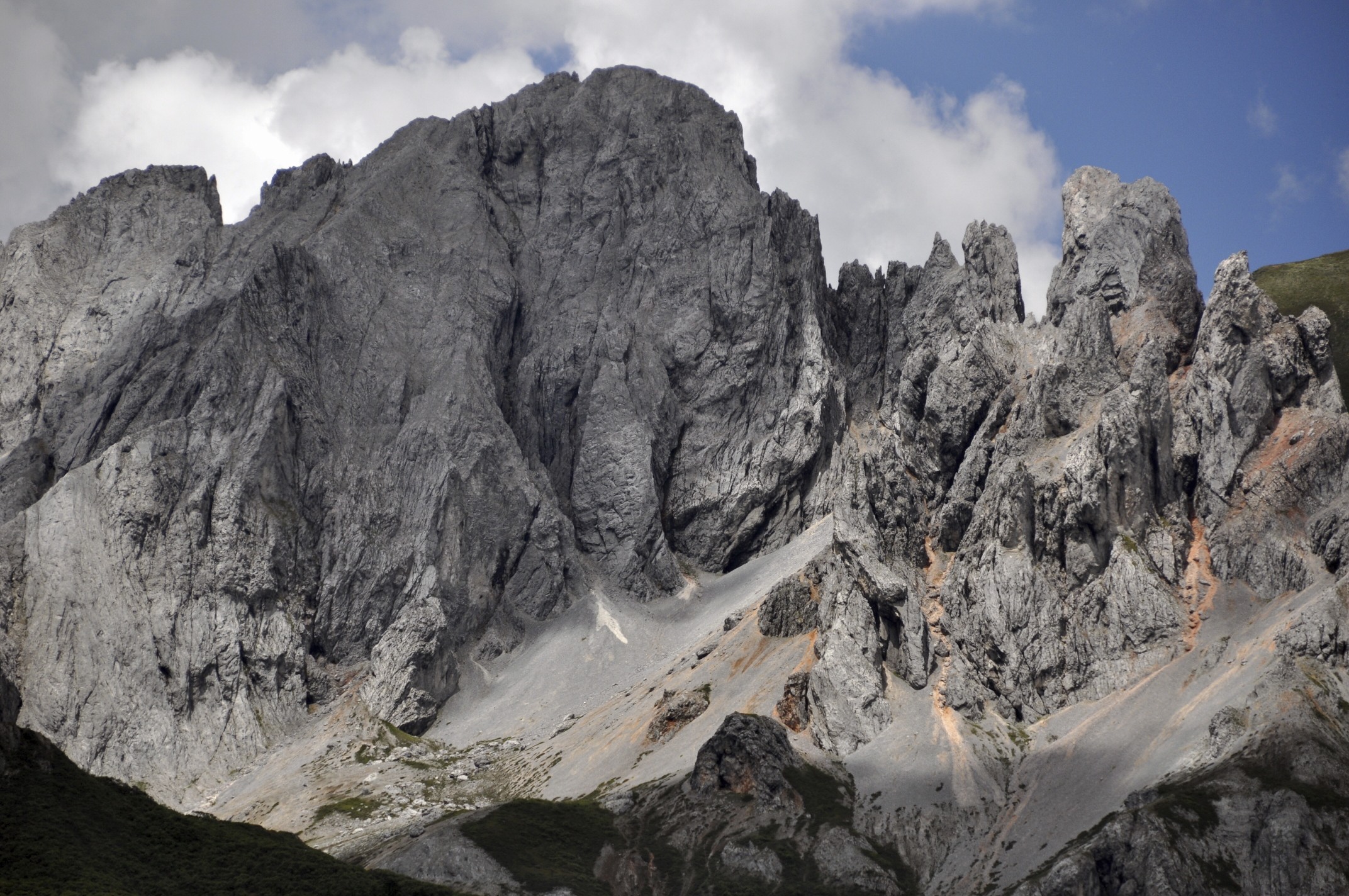
Jagged mountains along the way to Shangri La
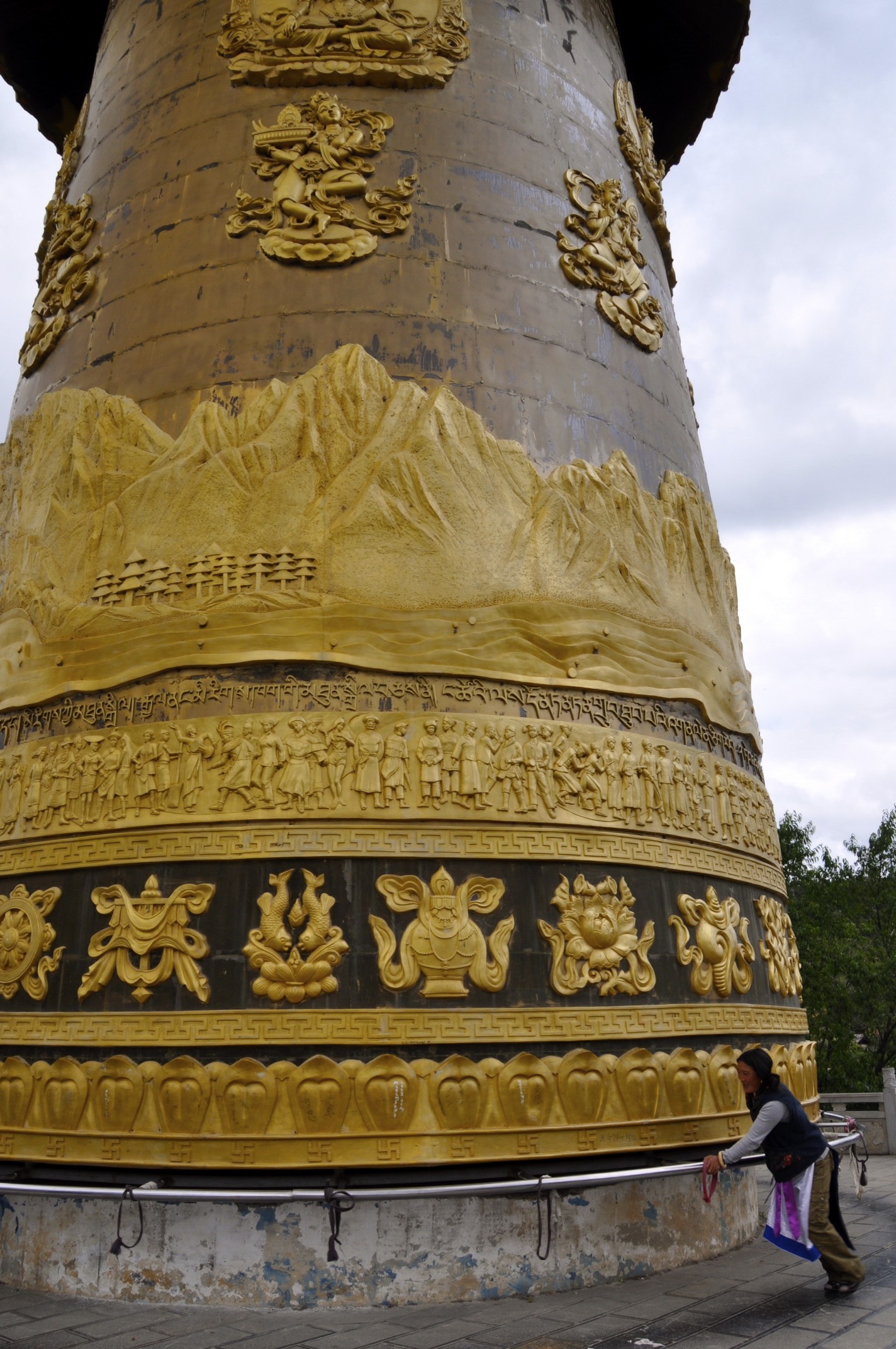
Woman spinning a large prayer wheels in Shangri La
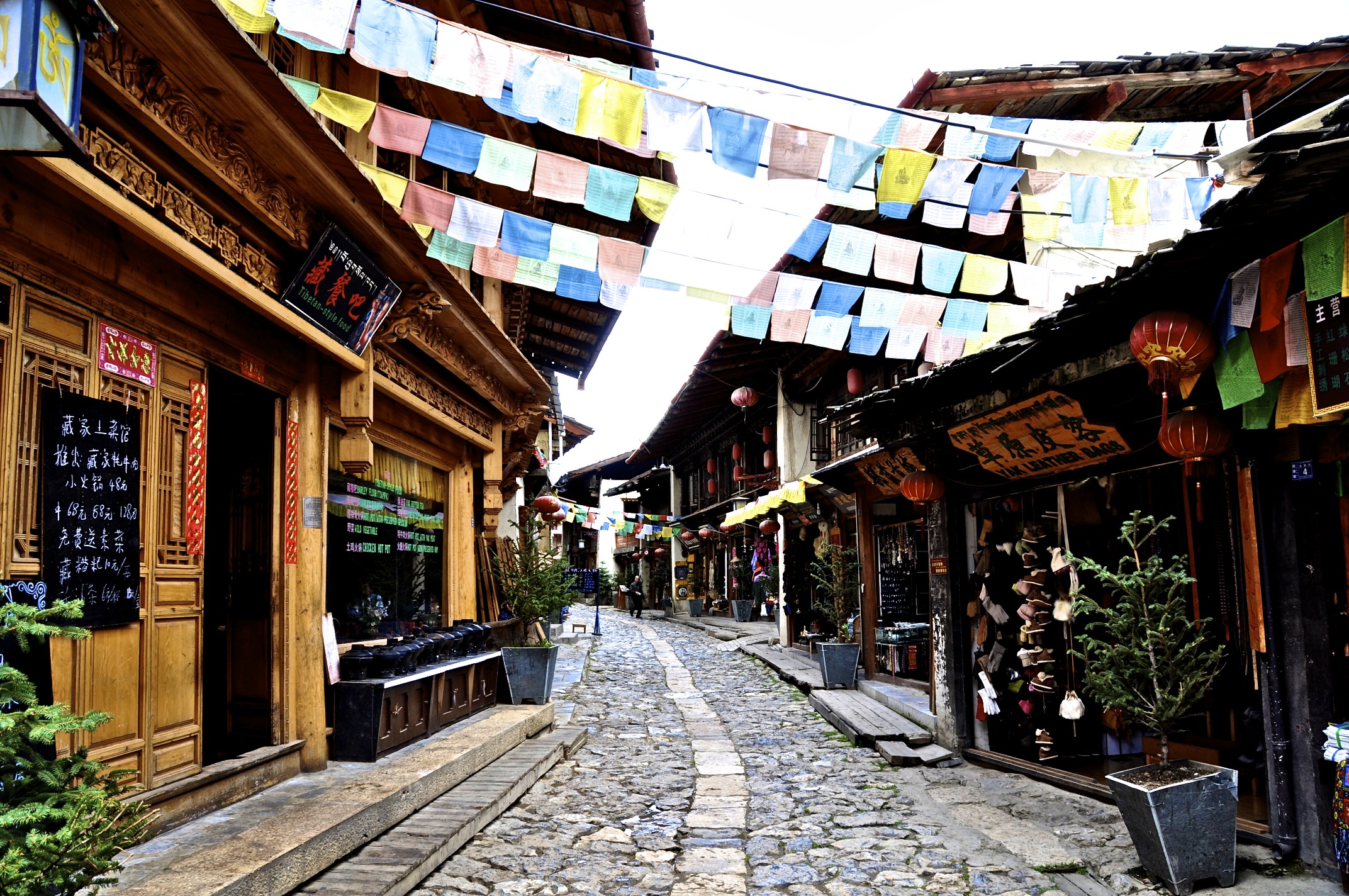
Old Town Shangri La
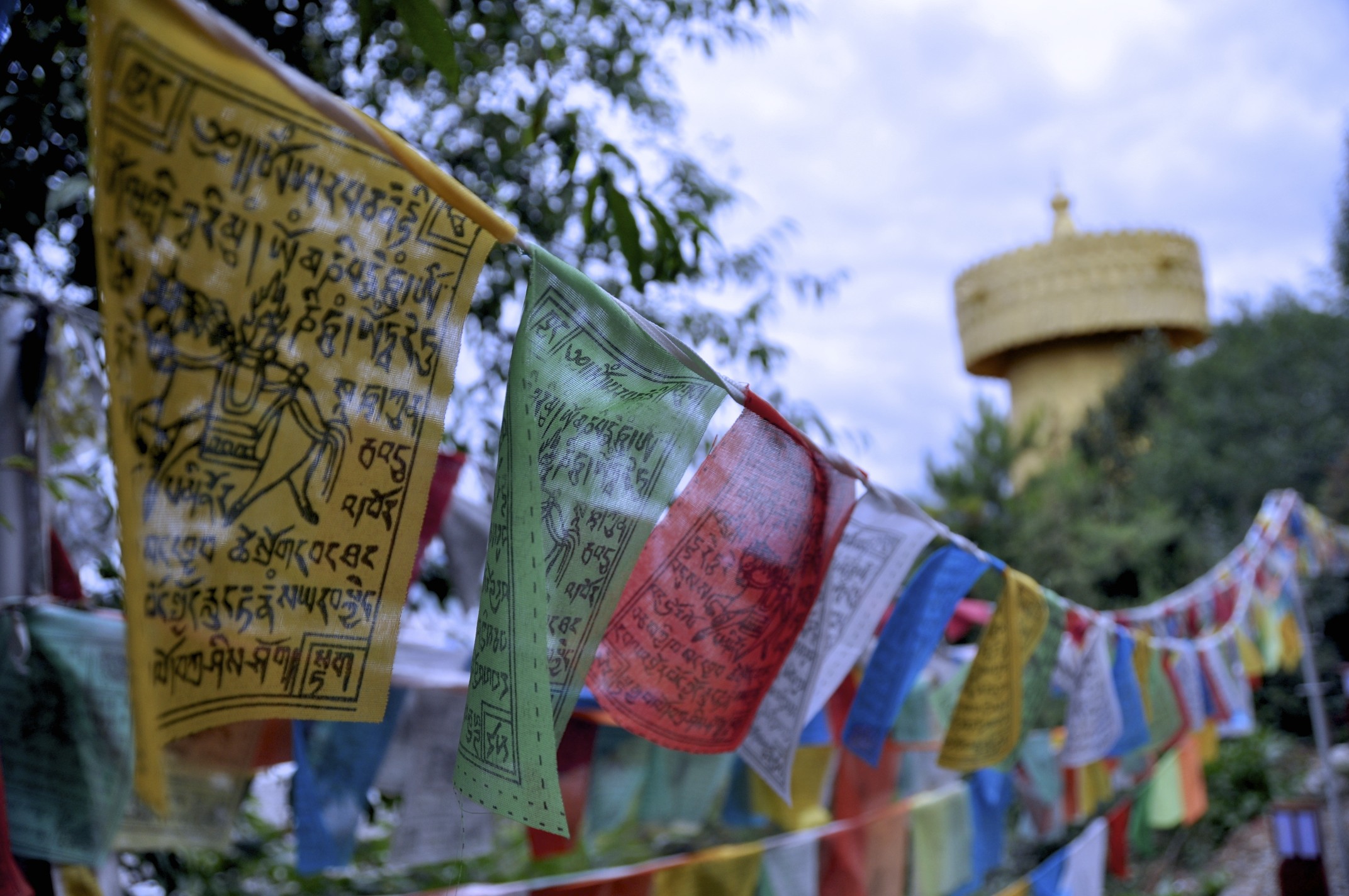
Prayer flags in Shangri La
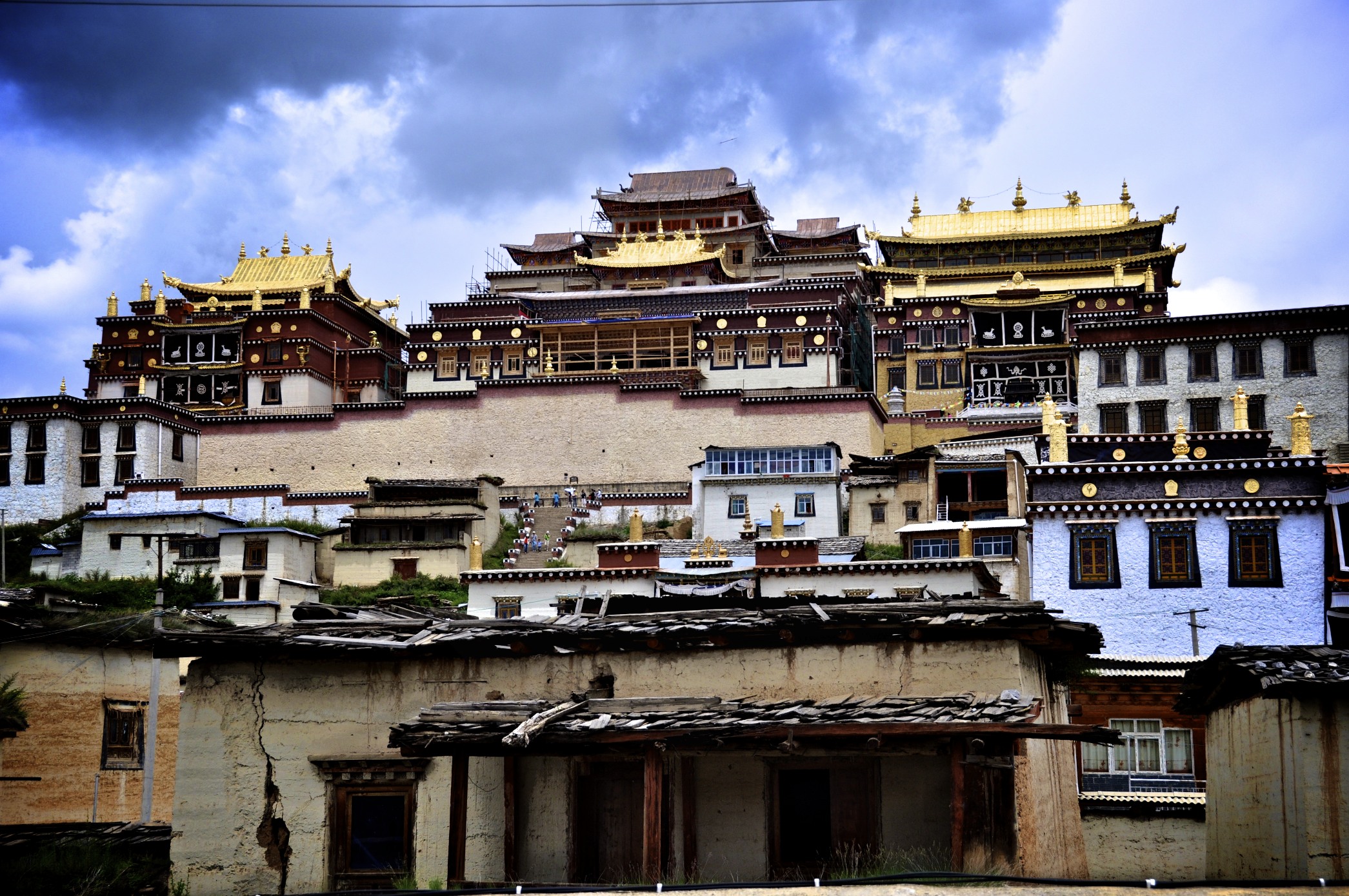
Ganden Samtseling Monastery
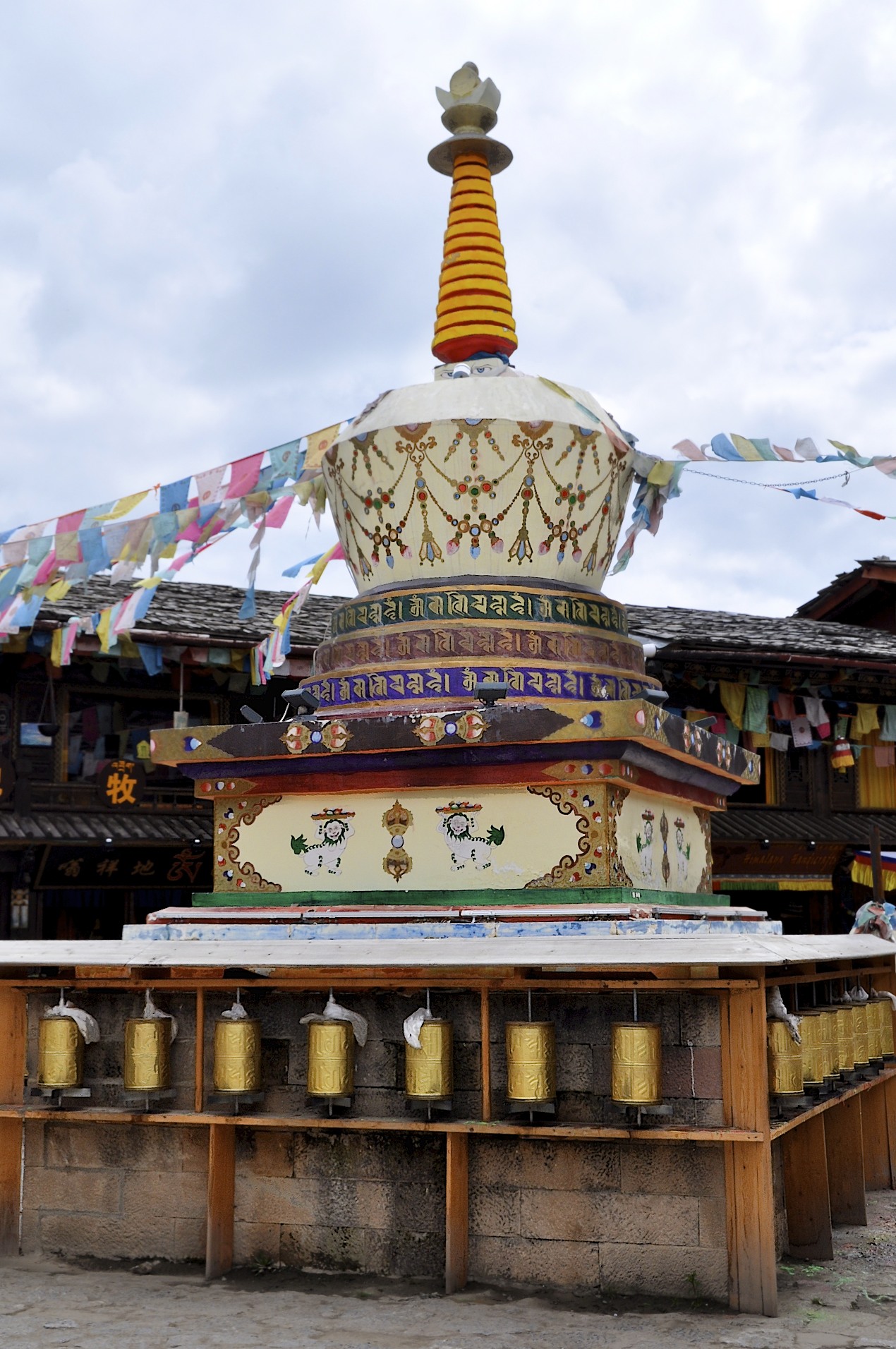
A stupa in the old town
Shangri La is a fun place to spend 2 or 3 full days in. There are so many fun restaurants and great guesthouses to stay in. It is a great place to spend some time relaxing after a long overland journey. From Shangri La, there are daily buses and flights to Kunming. Though the itinerary above is for 9 days, adding an extra day in places like Kangding, Tagong and Litang are recommended if your schedule allows it.
If you have any questions about this route or have any other questions regarding travel on the Tibetan Plateau, send an email to thelandofsnows@gmail.com
Congratulations for your blog! It`s awesome.
It`s helping me a lot and greatly incentivating me to go to all these places…
Are they all accessible? I am currently planning a 3-week trip to Sichuan and my friend is going to come from Korea to join me. I want to let her know the exact schedule to help her buy a round-trip air ticket, but I am not sure if I can ever send her the itinerary, for many parts of Western Sichuan may be inaccessible!
awesome post! I went to Tibet in 2006, but unfortunately lost most of my pictures, so it was awesome to relive the trip through your wonderful pictures.
your blog is really cool,i am very interested in Tibetan culture.
Have u been to JiuZhaiGou? i think that is quite beautiful.
keep on the good work!
Claudia….Sorry to hear you lost all your pictures! Sounds like you need to return to Tibet!
I just completed the Chengdu to Shangri La trip today. There are checkpoints in Yajiang and at the Sichuan-Yunnan border where foreigners are registered. The registration takes about one minute each time.
Trevor, Thanks for that useful update.
great website..thank you
Dear Losang,
Your blog is truly awesome!! A friend and I are about to travel to North Western China with for about a month. This itinerary sounds amazing so we are thinking of incorporating a lot of the information you provide into our travels.
I do have a question if that is ok, related to acclimatization safety to high altitude. Despite the 2-3days rest you recommend in Kangding, going from Kangding to Tagong sounds like a steep change in altitude (about 1125m) and Kangding to Litang, the ascent height is about 1400m within a day! We live at sea level and wonder if such quick ascents are safe for us? (most guidelines recommend going up 300m/day). Is there a way to break down the altitude change to get to Kangding slowly in a few days? If there isnt and it isnt safe to ascend so fast, we may have to skip Tagong and Litang; in that case, do you recommend any other places on the way from Kangding to Xiangcheng that dont require such steep ascent that comes with travelling through Tagong and Litang? Thank you very much in advance!
Anh, I hope you are doing well. In a perfect world, ascending 300m per day is best, however, on the Tibetan Plateau it is not always possible to ascend only 300m/day as there are simply no towns in between to stay and acclimatize in. Most people, after acclimatizing in Kangding for 2 or 3 nights, are fine going on to Tagong. You can expect shortness of breath, difficulty sleeping and a moderate headache, but these are normal. Unfortunately, there are no towns between Kangding (2600m) and Tagong (3750m) to acclimatize in. It is unlikely you will have any major problems going from Kangding to Tagong. I lived and worked at a guesthouse in Kangding and saw people everyday going to Tagong and 98% of them were totally fine, with the other 2% feeling moderately ill.
If you are planning to go to Xiangcheng, the only real way there is going to require you going above 4000m. There is simply no other route that can easily get you there without you going to high elevation. If you are truly worried about the elevation, then I suggest skipping all of the Tibetan Plateau and staying in areas of China that are below 2000m. Again, it is unlikely you are going to have major issues, as long as you take time to acclimatize when towns are available.
Losang
Hello Losang,
Thank you so much for this site – it’s very clear that you love this part of the world very much, and are passionate about sharing it with others! Also the photography is pretty amazing.
One question – I would like to do the Chengdu-Shangrila trip over Christmas, but it seems that temperatures along the way will drop down to -12 degress Celsius at night. I’m from Canada and have plenty of cold weather gear/experience, so this should not be a problem, but I’m wondering about the availability of accommodations during this period – especially accommodations with heating and hot water!
Thanks a bunch,
Yiliu
Yiliu….I hope you are doing well. Except for higher end hotels, which there are not really any of these along the route you are planning to travel, do not expect hot water and heat. Once you get to Shangri La, there will be hotels with heat and hot water, but along the way there won’t really be any.
Losang
I see – pretty much what I expected, from the bit of digging I’ve done. Thanks for the advice. Understanding that traveling in these these parts generally requires flexibility with regard to itinerary, do you think that public transportation and some form of accommodations would be available along the way, from December 17th to 24th?
Public transportation runs everyday of the year, even during Tibetan New Year, the most important holiday of the year.You will also not have any problems finding accommodations.
Losang
Great, thanks!
Hey Losang!
Awesome blog indeed, and your old website was already great too. Lots of beautiful impressions and a great help for people planning to travel Tibet (beyond TAR) too. Traveled some parts of Amdo (Qinghai,Gansu) in October and I’m still dreaming of it.
So I was about to ask the same thing as Yiliu, as I was thinking about doing this in the beginning of February. Sounds pretty tough though, temperature-wise… Anyway, so do you think that I wouldn’t have to expect roads along that route that are generally closed during these months?
Yiliu, if you see this, do you mind sharing your contact and some experiences once you’ve made it there?
Thank you!
David
David, It will be unlikely that you will come across snow heavy enough that the roads will be closed. The only part of this route that can get heavy snow is the high pass between Sichuan and Yunnan provinces. Though this pass can get heavy snow from time to time, it is rare that this section of road closes for any long length of time.
I have traveled tens of thousands of kilometers across Tibet in the winter time and have never come across a section of road that was closed. Keep in mind that the winter months in Tibet are normally quite dry with lots of clear, sunny days. Again, I am not saying that it will not snow, but in general the snowfall amounts through most of western Sichuan in February will not be enough to close roads.
Losang
Hi Losang,
This trip looks absolutely amazing and your pictures are superb!
My friend and I were thinking of doing something like this in July.
What is the Tibet permit situation. Is it necessary to get a permit?
I’m confused!
Thanks, audrey
Audrey….I hope you are doing well.
Only half of the Tibetan Plateau requires travel permits and an organized tour. The other half of the Tibetan Plateau, including the overland route from Chengdu to Shangri La, does NOT require permits or an organized tour. You are free to travel these areas on your own, independently. Most the Amdo and Kham regions, which are home to nearly 60% of the total Tibetan population, are open to foreign travelers without any restrictions.
Have a good day….Losang
Hi there — thank you so much for an inspiring and beautiful write up. We are planning to travel this route this fall thanks to your notes here. If you don’t mind, I have two questions: 1) as of right now, our trip will take place during 28 sep – 7 oct, the national holiday week. is this a terrible idea in terms of trying to secure tickets for a bus / hotel lodging? how busy will this area get? 2) lonely planet guide suggests that instead of trying to get a bus ticket from Xiangcheng to Shagri La, we shoud opt for Daocheng to Shangri La because the buses originate there. Do you think that is a good idea? Thanks so much again for your insights!
Awesome article!
Thank you so much for the information and trip advices.
I’m planning to take this tour on my trip to sechuan next month.
I have two questions:
1. All the routs I read about is from Chengdu to Shangrila (going from the north to the south )
Is there a problem taking this trip the other way around? From shangrila to Chengdu?
2. Do you know how can I find real time information about the possibility of traveling there for foreigners? I.e. if the government is not closing these roads for non Chinese tourists?
Thank you so so much!!
Tami
This area currently is all open to foreign travelers. There is no problem making the trip in reverse (Shangri La to Chengdu).
Hi Losang
thanks for all your tips!
we are planning to do the backdor but from shangrila to chengdu.
does the direction makes any difference?
Thanks
Aviad
No, direction does not make a difference. Have a good trip!
Thanks for all the info Losang, great web site. I’m really glad that the area is open to foreign travellers. I’m writing my question here as the answer may be relevant to others.
I plan to go from Shangri la to Chendu after exploring Yubeng. I need to be in Chendu about 10th Oct and I’m a little worried that the holiday week may make travelling impossible. Are buses booked in advance? are hostels likely to be full?
If it’s not going to be possible to travel during that week I’m going to need to change my plans as I think I can only get a 1 month visa and my plans may be too ambitious.
many thanks
Carol
Carol….I hope you are doing well.
The first week of October does tend to be busy, not just across China, but also on the Tibetan Plateau. Getting buses should be okay as bus tickets normally only go on sale 2 days before departure. I recommend purchasing bus tickets for your next destination as soon as you arrive in each town. Also, it is best to make reservations at hotels/guesthouses during the first week of October.
I think you will be fine to travel that week as long as you have your route well planned out and make hotel/guesthouse reservations in advance.
Have a great trip!
Losang
Hello,
Very helpful. To recommend!
Just a fe questions since I’m planning to go from shangri la to litang The next week.
Is the road usually in “safe” conditions?
In terms of security and time, would you recommend to run the xiangcheng way or go through Daocheng?
Is here the possibility the police does not let us pass through?
Thank you!
Thanks for the reply Lobsang, I delayed answering until I knew if my visa would be OK and it seems they are happy to give me 2 months (London Chinese Visa service were very helpful). I’ll take your advice and book in advance and allow extra days in case I have to wait. I assume I’m not going to be able to go to Markam without a permit and think my time will probably better spent going to Yading. Once again many thanks, I’ll post an account of my experiences on my blog and send you a link.
Hi Losang,
this blog is just awsome. Thanks for sharing all the information and pictures.
My question: Is it possible to do this overland trip in april or is going to be too cold and too much of snow?
thanks, christian
Christian,
It is possible to do this route in April. The weather will still be cold in places above 3000 meters, but with proper clothing you will be fine. The roads should be clear of snow, however, it is impossible to say for sure.
Losang
Hey Losang,
I’m making the trek from Shangri-la up to Litang for the chinese national holiday (10/01-10/07).
Any advice on whether to travel via Daocheng or Xiangcheng to Litang? I have no problem with minibuses (given the price is right). Hopefully it’s open to foreigners!
Thanks,
James
I did this route in 2010 and it’s one of the best things I ever did, mind blowing scenery, great people (even if you can’t talk to them), fascinating culture and architecture, some good food. Only down side is the long bus rides but it’s totally worth it and at least there is impressive scenery to look at.
Just wanted to say thanks for your help. I managed to get toKawa Karpo and see the sunrise on the mountain. Yubeng was great and Lobsang really helpful and worth supporting.
I did the road trip from Shangri La to Chengdu, stopping over in Yading (stunning) and Litang (pity about the weather) and I’m so glad I managed to. I still speak no Chinese and had no problems so would encourage anyone who is happy to adapt their plans to try.
Thanks
hi, wow i have had this site bookmarked since over a year ago! now i’m finally thinking there is a time when i can go.
is there a tour company you can recommend for hiring a private car from chengdu to diqin? thanks!!
Hi Losang!
This is most certainly overdue but it needs to be said:
Your blog post is really a helpful resource and it remains a nice roadmap for our next Chinese escapade.
Take care (wherever you are )
All the best
Guille
Wow! Thank you! I am glad I could help you with your travel plans in the Kham region!
Have a good day…Lobsang
Hi, this site is incredible! Great info and stunning photos. Thank you!!
I am currently in Tiger Leaping Gorge and debating about heading up to Chengdu overland (I have two weeks). Would love to see Sertar.
But, after seeing the vehicle in front of mine get sent over a cliff from a landslide on te mountains of India during rainy season, I am a bit traumatized and very cautious of road conditions. What are your thoughts on this route in July? I know some info says roads can get bad but this is from several years ago and China’s roads have only improved since then.
Thanks for any insight!!
Traffic accidents, of course, can happen anywhere, even in the most developed countries. In the rural parts of the Tibetan Plateau, the roads have certainly improved dramatically the past 10+ years, though in some areas they remain a bit rough. I really don’t know how to answer your question. All I can say is that I think the Tibetan areas of Kham (western Sichuan) are amazing and if you have the opportunity, you should visit them.
Have a great journey!
Lobsang
Hi Lobsang,
Thank you so much for your brilliant website. I had no idea about the Kham region. I was planning to go to explore Sichuan province from Chongqing and then fly to Dali in mid-November. Your post has inspired me to follow your suggested route.
All the best,
Teresa
You are very welcome! Enjoy your journey in Kham.
Lobsang
Hi Lobsang,
thanks for compiling such interesting information and wonderful photos. I am very interested to cycle from Kangding to Lijiang in late November. I would be covering from 60 km to 100 km a day depending on gradient and the effects of altitude. Are there places to stay at reasonable intervals along the road or will camping be necessary in less populated more remote areas? Camping at altitude at this time of year may remove the fun element especially when temperatures plummet at night time. Thanks for any advice.
Regards
Dom
Hi Dom…I emailed you some information on your upcoming cycling trip. Have a great journey!!
Lobsang
Hi Lobsang, awesome website, definitely the most helpful out there for traveling in this region.
I was thinking about doing this trip from July 24 to August 7. Will the weather allow it?
Thanks a lot for your feedback!
Manuel…I hope you are doing well. The route from Chengdu to Shangri La is open all year round. Enjoy your journey.
Lobsang